
A hot water heat pump pulls warmth from the air to heat your water, using a fraction of the power of an old element or califont. We help you pick the right one and install it anywhere in New Zealand.
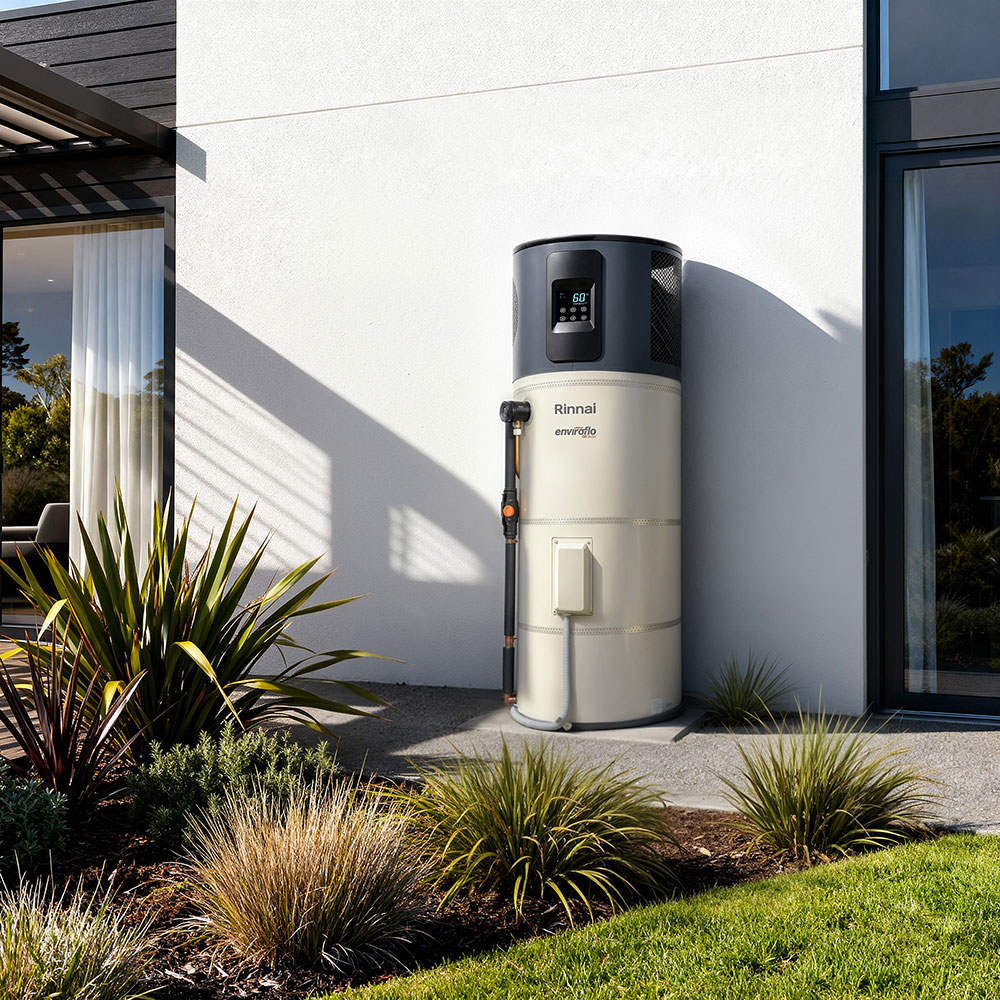
We recommend and install New Zealand's most established hot water brands
Old electric elements turn 1 kW of power into 1 kW of heat. A heat pump turns it into four or five. That difference shows up on every power bill.
With a COP of 4 to 5, a heat pump uses roughly a quarter of the energy of a standard element to heat the same water. Most homes see a real drop on the very next bill.
The Rinnai EnviroFlo GR runs on heat pump alone from -7°C to 45°C. No element kicking in on frosty mornings, no nasty surprise in July.
The newer units run on R290, a natural refrigerant with a tiny global warming footprint. The EnviroFlo uses just 400 grams of it.
Add a $40 solar cable to the EnviroFlo and it heats your water while the sun's up, before you export power to the grid. That's the job a $1,800 diverter usually does.
We stick to Rheem and Rinnai because they've been here 40 to 50 years and have servicing agents in every region. Parts and help are never far away.
Models like the EnviroFlo and Haier connect to WiFi, so you can set schedules and boost hot water from an app before the whole family's home.
Same idea as your fridge, run in reverse. It moves heat instead of making it, which is why it needs so little power.
A quiet fan draws in outside air. Even cold winter air holds plenty of usable warmth for the system to work with.
A small compressor lifts that low-grade heat up to hot-water temperature, using a little electricity to move a lot of heat.
The heat transfers into the tank and stays there, ready for showers, dishes and laundry whenever you need it.
Every home is different. Here's how the models we install compare, so you can see where each one fits.
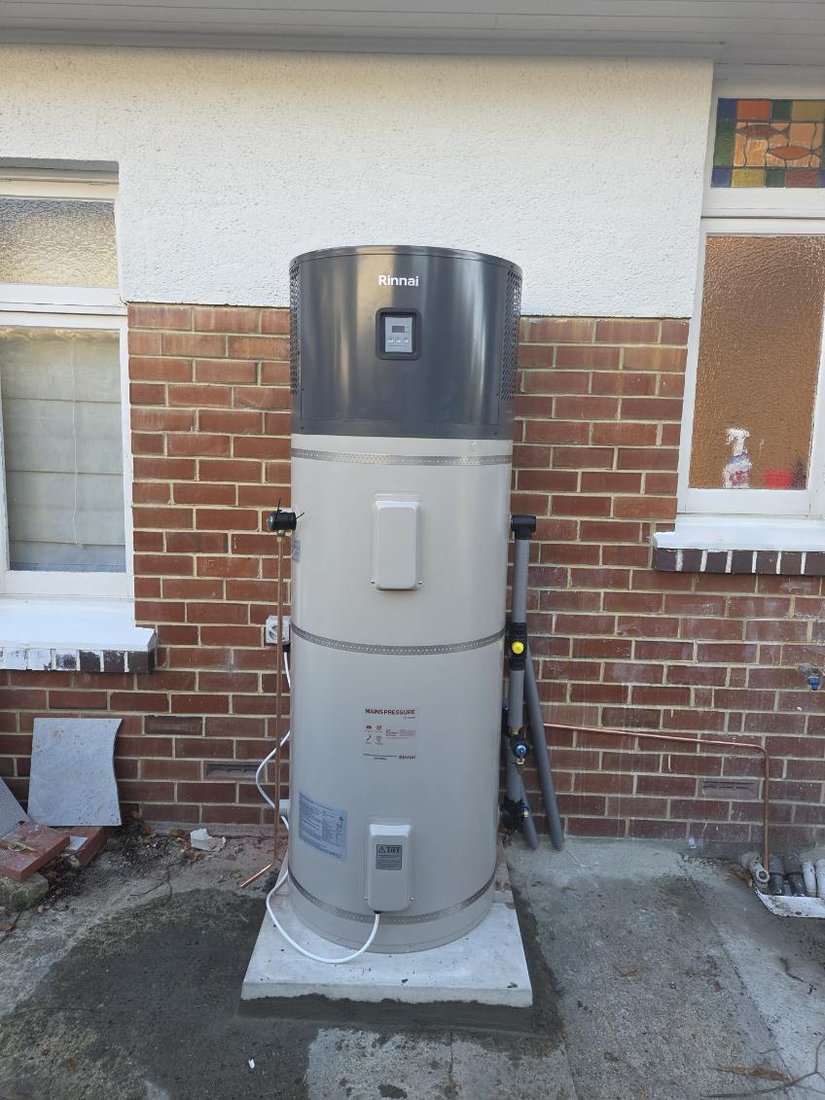
Our pick for most homes. It runs on heat pump alone from -7°C to 45°C, connects to WiFi, and takes a $40 solar cable so it heats off your panels first. It plugs into the same socket an old califont used, so in many cases we install it without an electrician on site.
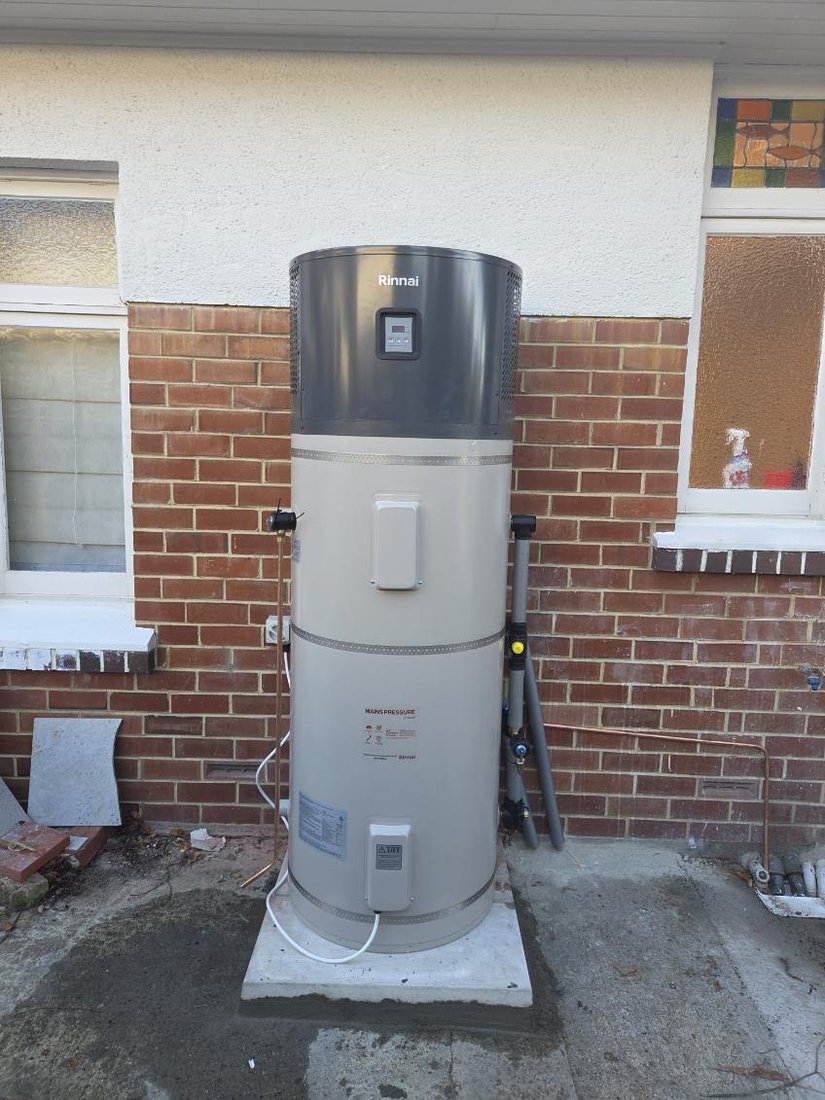
Designed by New Zealand researchers for our weather, including coastal sea-spray. The heat pump module sits on top and lifts off on its own for servicing, so your cylinder can keep running on the element while it's repaired. Hot water recovers fast too, in as little as 20 minutes in the right conditions. Prefer the tank inside and the pump outside? The HydraHeat Split does exactly that.
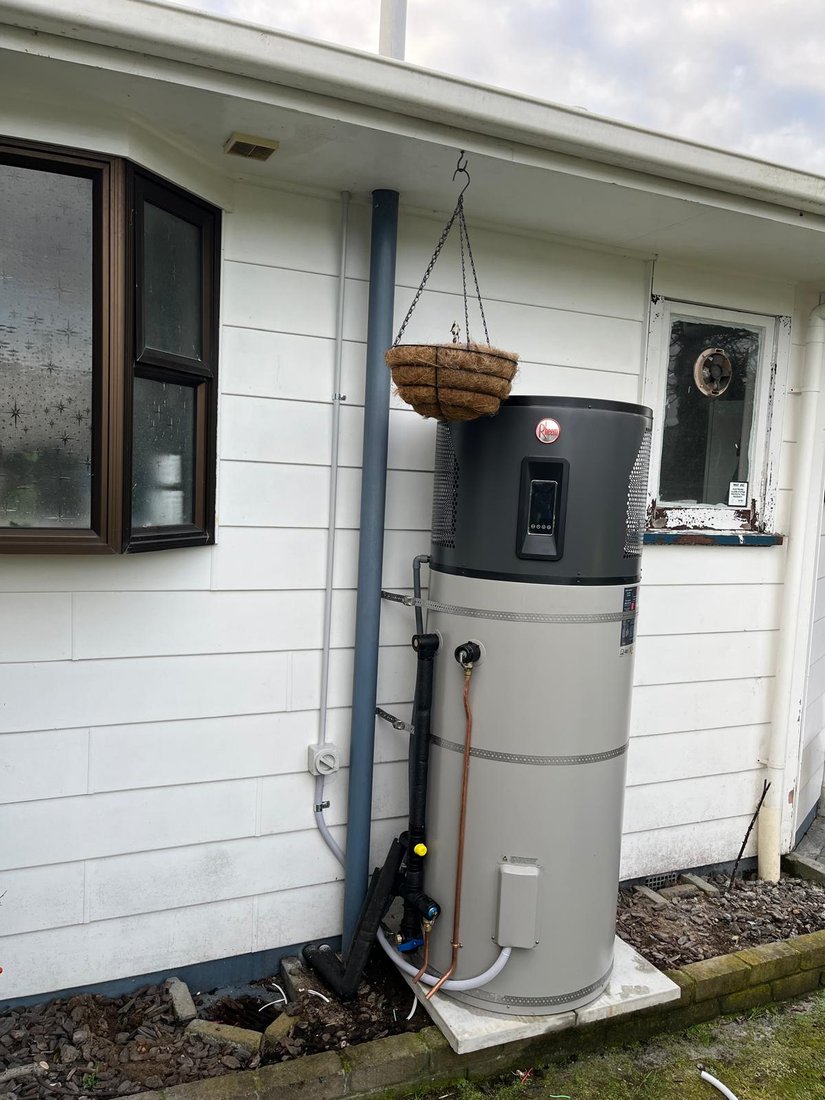
If you want a name that's been on Kiwi roofs and in Kiwi cupboards for decades, this is it. The AmbiPower is a little easier on the wallet up front, and its COP climbs to 5.2 at 19°C ambient, so it's very efficient when the weather's mild. No app, just reliable hot water.
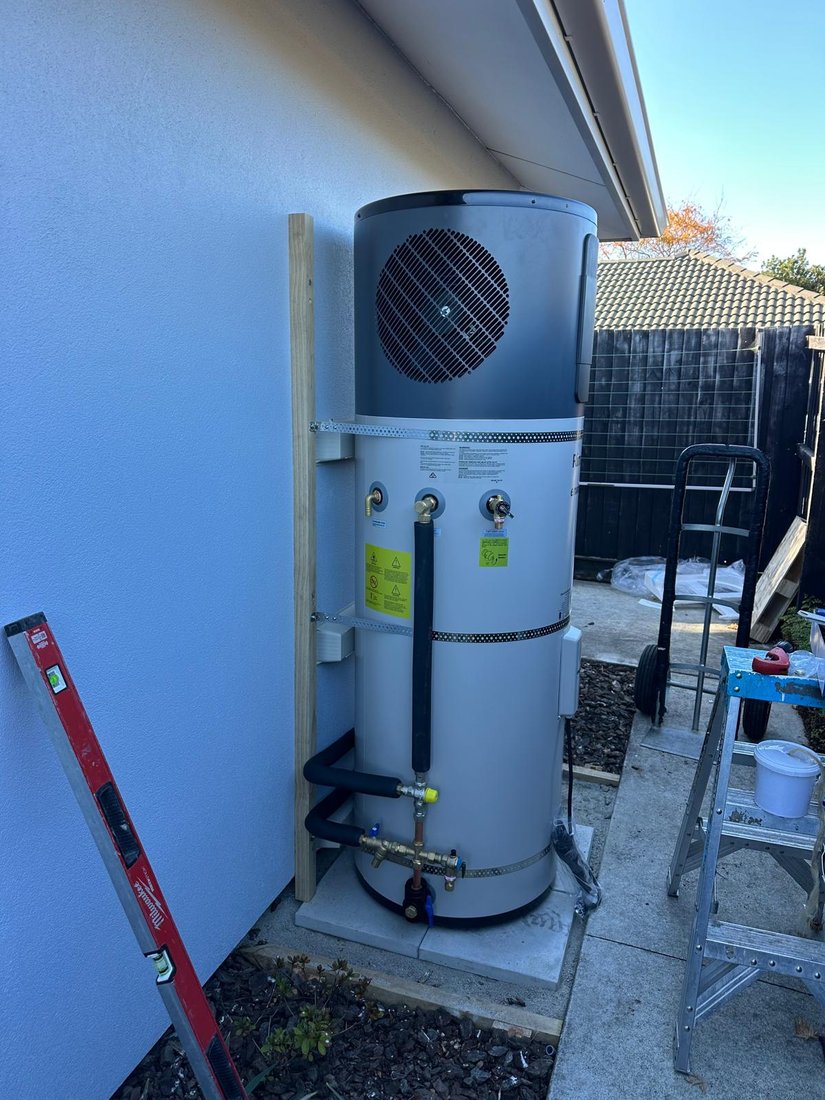
The sharpest price for the quality, and a big tank for larger households. Haier owns Fisher & Paykel here, a brand Kiwis already trust, and it connects to the SmartHQ app so you can manage it from your phone.
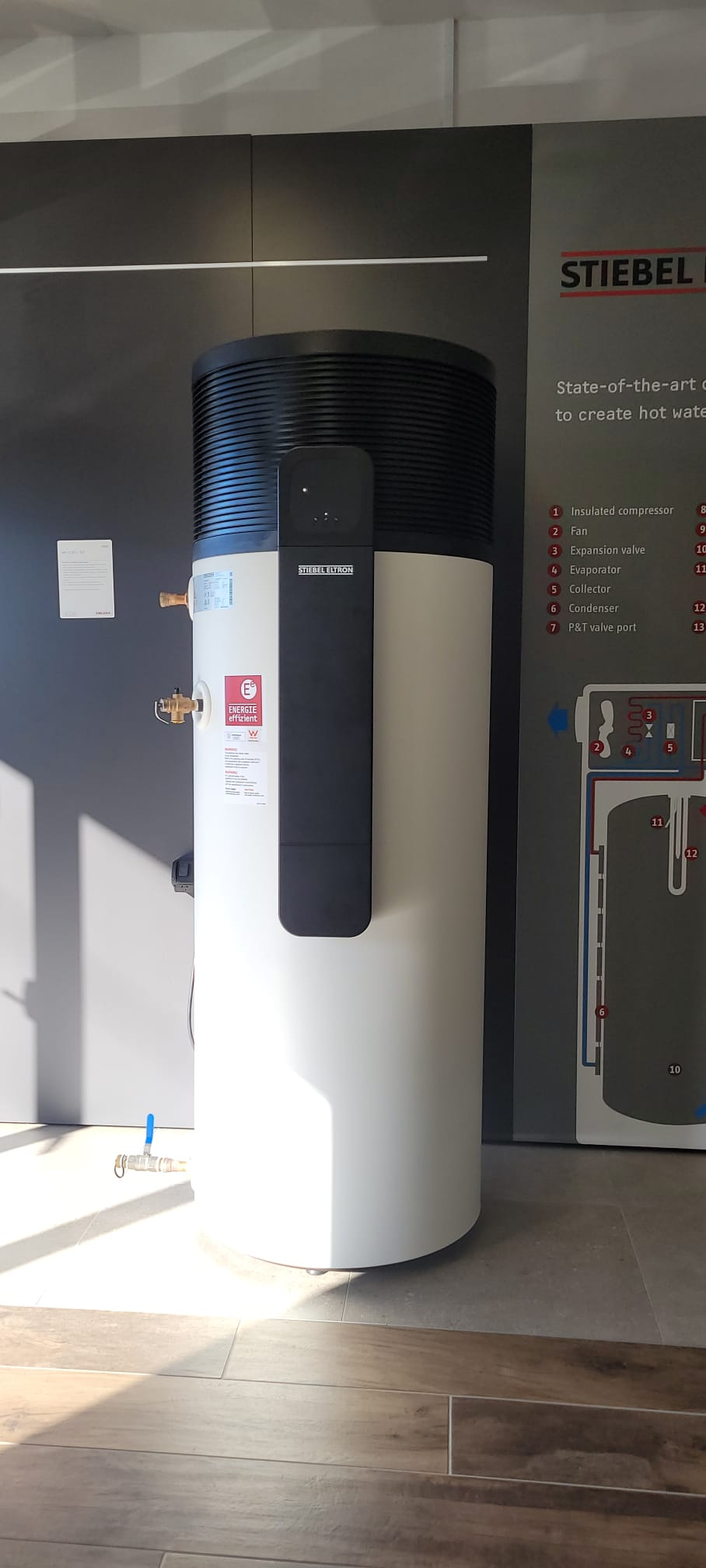
German-made and built to last, for homeowners who want the premium option. Stiebel also makes air-source hydronic systems that handle your hot water and central heating in one go. These sit higher in price and need a specialised install, which we're happy to arrange.
Wherever you are, we've got you covered. From Auckland down to Invercargill, we help you pick the right hot water heat pump and install it, with servicing agents nationwide.

The Rinnai EnviroFlo takes a $40 solar cable that connects to your PV system and heats your water while the sun's up, before any power heads to the grid. Even the Legionella safety cycle runs off the solar-heated element. It does the same job as an $1,800 diverter, for the price of a takeaway dinner.
We stick with Rinnai and Rheem for a reason. When we visited Rinnai's facility we saw how HydraHeat units are built and serviced, with replacement parts kept here in New Zealand and modules repaired wherever possible, even out of warranty.
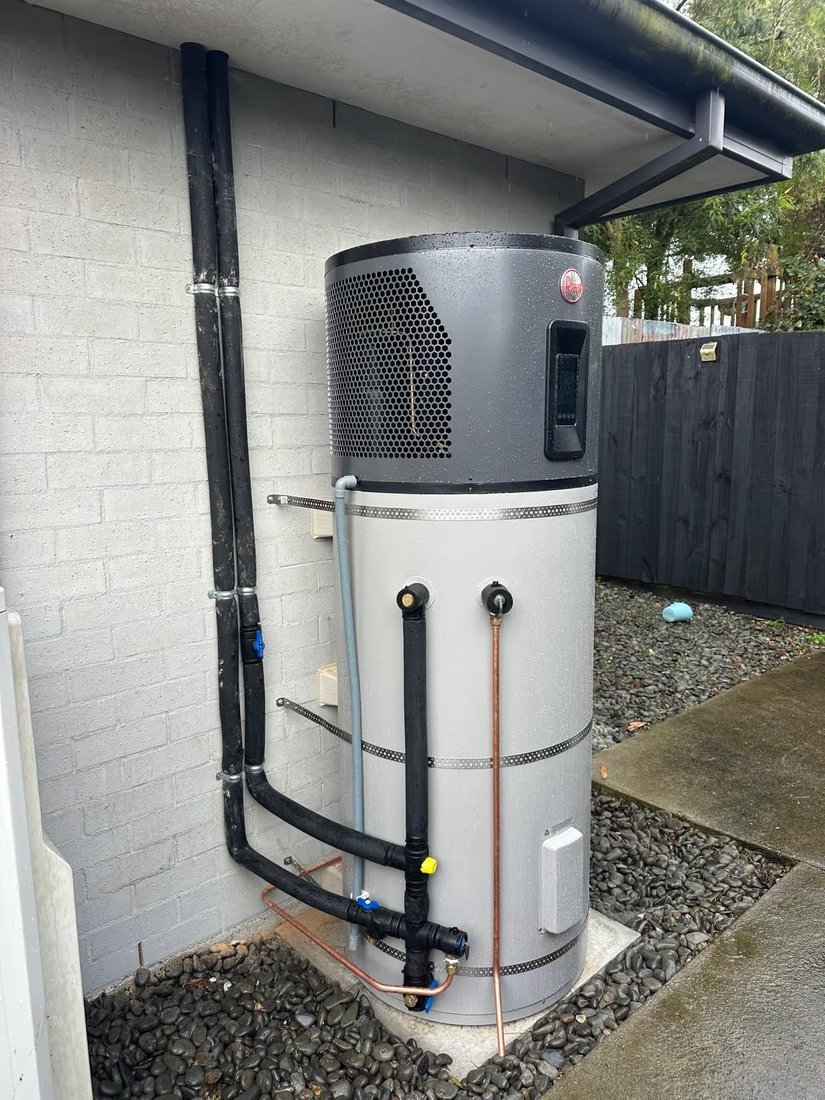
Real Google reviews from homeowners we've helped switch to a hot water heat pump right across New Zealand.
Yes. The Rinnai EnviroFlo GR runs on heat pump alone from -7°C right up to 45°C, so the element doesn't need to kick in on cold mornings. Every model we fit is chosen to handle the climate where you live, including frosty inland spots and salty coastal air.
It depends on your household and power price, but a heat pump uses roughly a quarter of the electricity of a standard element to heat the same water. Most homes notice the drop on the first bill. We'll give you an honest estimate for your situation when we quote.
Often, no. The Rinnai EnviroFlo plugs into the same socket an old califont used, so in many homes we swap it over without an electrician. If your setup does need one, we'll tell you up front in the quote.
That's what the free quote is for. As a rough guide: the Rinnai EnviroFlo suits most homes, the Rheem AmbiPower is the trusted value pick, the Haier gives you the most hot water for the money, and Stiebel Eltron is the premium German option. We'll match one to your home and budget.
You're covered by warranties up to 5 years on the heat pump and 7 on the tank. We stick to Rheem and Rinnai because they keep parts in New Zealand and have servicing agents in every region, so you're not left waiting on shipping from overseas.
Absolutely. Add the $40 solar cable to a Rinnai EnviroFlo and it prioritises heating your water from your panels before exporting to the grid. It does the same job as a diverter that usually costs around $1,800.
Yes, we cover the whole of New Zealand. Wherever you are, give us a call on 021 594 583 or request a quote and we'll sort the right unit and install for you.
Tell us about your home and we'll recommend the right hot water heat pump, with a clear price and no pressure. Installed anywhere in New Zealand.
Takes under a minute. We'll get back to you with the right unit and a clear price.